The Story of Kebo Iwa and the Shrines of Gunung Kawi
The entrance to Gunung Kawi takes you down into the valley. Starting from the road at Tampaksiring, the path goes between walled gardens and rice terraces before you reach a long stone staircase. As you walk down, you can hear the Pakerisan River before you see it. The air gets cooler, and moss covers the stones under your feet.
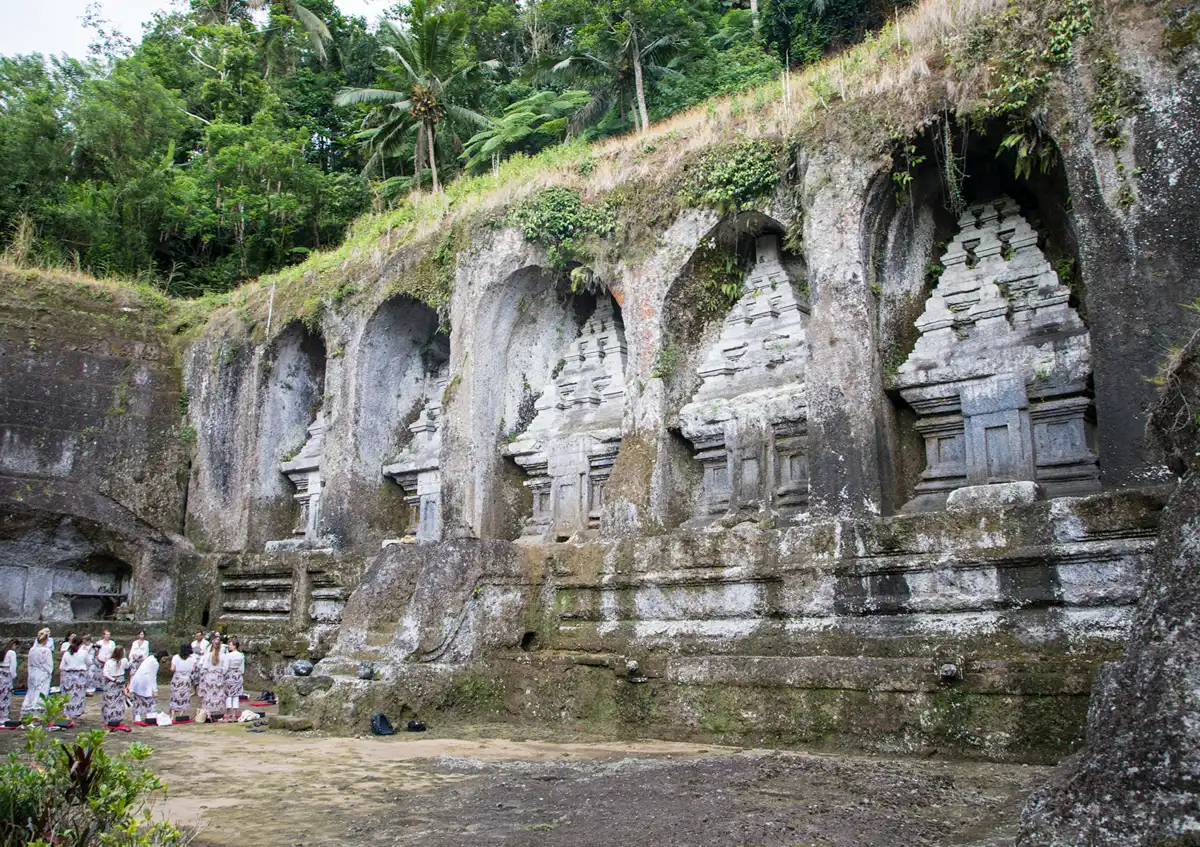
When you reach the valley floor, you see ten large shrines carved into the cliff. Each one sits in its own niche, looking out over the Pakerisan River. From here, their impressive size is easy to see.
The Shrines Above the Pakerisan
The Gunung Kawi complex was built in the 11th century. Five shrines are on the east side of the Pakerisan River, four are on the west, and one stands alone. Each shrine is carved to look like a temple tower, with a decorative doorway that doesn’t open. Some have Old Javanese inscriptions above them.
The complex was built during the reign of King Anak Wungsu, the son of King Udayana and Queen Mahendradatta, showing Bali’s early royal history. The eastern shrines are thought to honour King Udayana and his family. The western shrines are also linked to the royal family, but their exact purpose is still debated. The inscriptions give hints about these royal connections, but not all questions are answered.
Gunung Kawi in Ubud is part of a larger historical area between the Petanu and Pakerisan river valleys. This region, called the Valley of the Kings, is linked to Bali’s early kingdoms. Ubud is on the western side of this area.
The Giant of Bedahulu
According to Balinese tradition, Kebo Iwa was a strong minister and warrior from the kingdom of Bedahulu, which fought against Majapahit’s expansion into Bali in the 14th century. His name includes the word for water buffalo, and the legends add more details. Stories describe him as a giant with great strength, a huge appetite, and the power to dig wells with his bare hands.
One version of the legend says Kebo Iwa carved the ten shrines into the cliff with his fingernails in just one night. His strength is mentioned in other stories too. Goa Gajah, a cave south toward Bedulu, is also linked to Kebo Iwa in Balinese tradition.
Another part of the legend tells how Kebo Iwa died. In one version, Gajah Mada tricked him into coming to Java and arranged for his death there. This story is connected to Majapahit’s conquest of Bali in 1343, but the details come from Balinese tradition, not official history.
What the Stone Holds
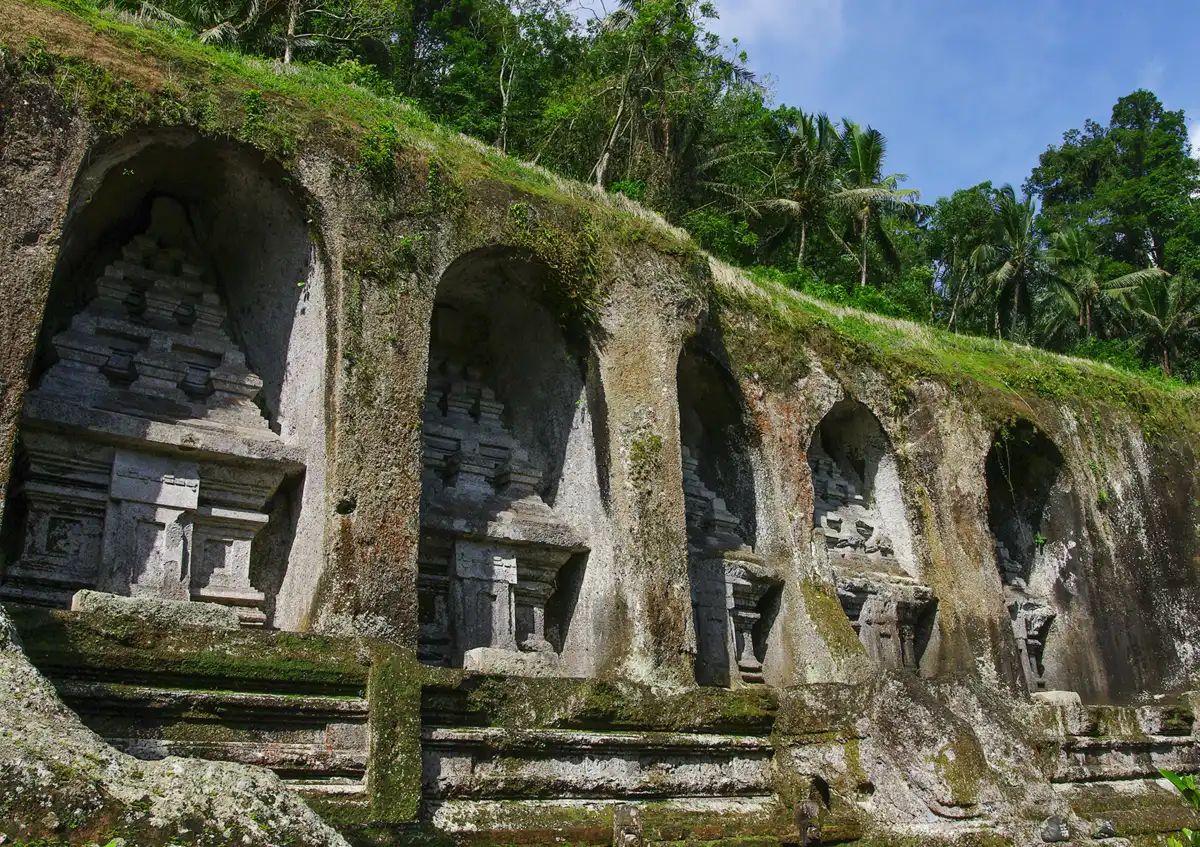
Archaeology and legend give us two ways to understand Gunung Kawi. The inscriptions, dates, and links to the Warmadewa court show its connection to Bali’s early royal period. The shrines and inscriptions are a historical record, separate from the legend of Kebo Iwa making them in one night.
Gunung Kawi is both a sacred place and an important archaeological site. People leave offerings in front of the shrines, and the complex has water channels and rock-cut spaces used for religious retreats and meditation. Visitors should respect the site’s rules and listen to temple attendants when entering sacred areas.
The legend gives another way to see Gunung Kawi, showing how Balinese stories and archaeological research both shape our understanding of the site.
Walking Down Into the Valley
Visiting early in the day makes the walk more pleasant, especially when it’s warm. Parts of the staircase have no shade, so give yourself enough time for both going down and coming back up.
You need to wear a sarong and sash, which you can borrow at the entrance. Please cover your shoulders, don’t step over offerings, and follow the temple’s entry rules. Women who are menstruating should check the temple’s guidance before visiting.
You can visit Gunung Kawi along with two other historical sites near Ubud. Goa Gajah is south toward Bedulu, and Pura Tirta Empul is farther upstream on the Pakerisan River. Seeing all three in one day gives you a wider view of the area’s religious and archaeological history. Guest services can help arrange a tour with a driver and a guide who knows the Pakerisan sites well. For more details, check the Bali activities page.
Returning to the Ridge
The drive back takes about 30 minutes, depending on traffic. The Petanu River runs parallel to the Pakerisan a few kilometres to the west, cutting through the same plateau. Viceroy Bali, a boutique retreat, sits above the Petanu gorge on the ridge at Petulu. From a villa terrace in the late afternoon, you get a different view of Bali’s river valleys, where the landscape and historic sites are closely linked.
Plan a Morning in the Valley
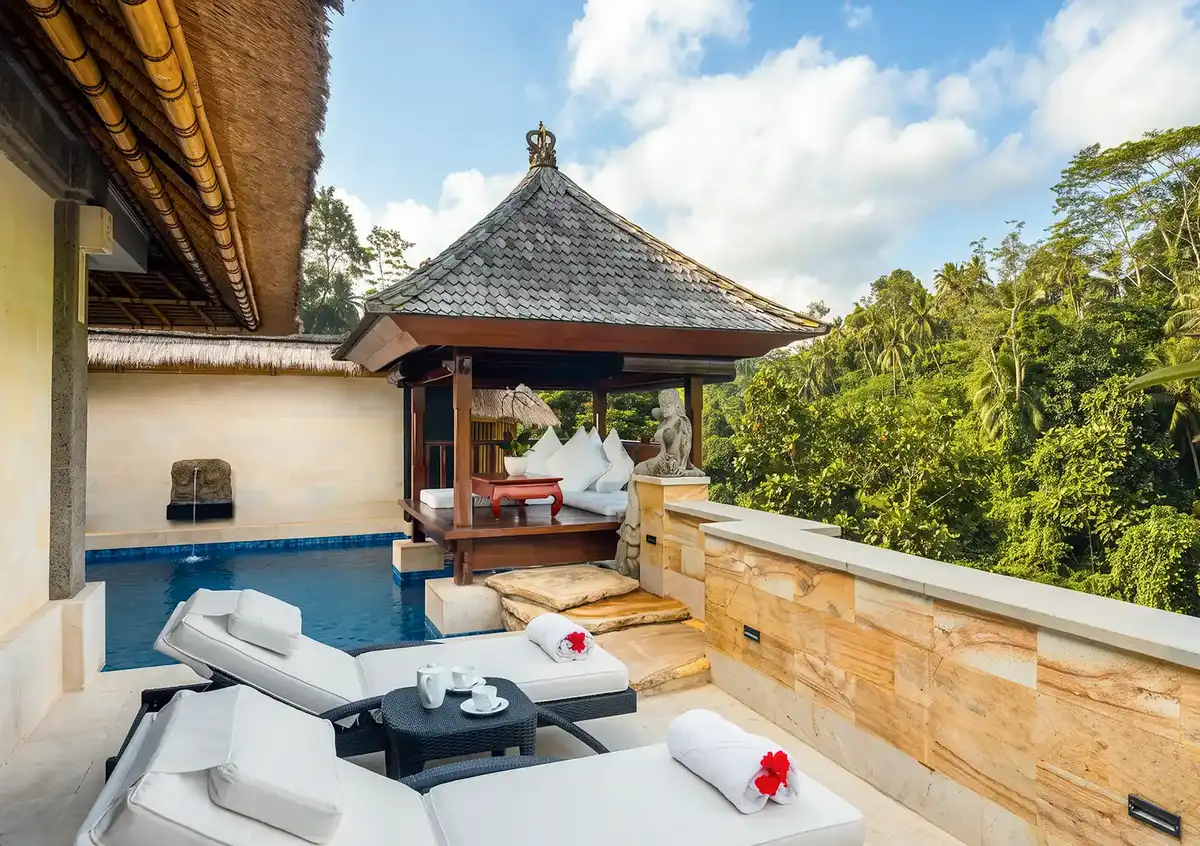
After spending the morning at Gunung Kawi, you can enjoy a peaceful afternoon overlooking the valley at Viceroy Bali. Guest services can plan your schedule around breakfast in your villa and have a car ready for you. Arrange your stay today.
Questions People Ask
Who was Kebo Iwa?
Kebo Iwa was a powerful figure associated with the kingdom of Bedahulu, remembered in Balinese tradition for his extraordinary strength. He is credited in legend with cutting the shrines at Gunung Kawi into the cliff in a single night, and with carving Goa Gajah.
How old is Gunung Kawi?
The complex dates to the 11th century and is associated with Bali’s early royal period, including the reign of King Anak Wungsu. It is roughly 900 years old and is among the island’s significant surviving archaeological sites.
How far is Gunung Kawi from Viceroy Bali?
Gunung Kawi is around 30 minutes by car from Viceroy Bali, depending on traffic. The site is in Tampaksiring, north of Ubud, while Viceroy Bali sits above the Petanu gorge at Petulu, one valley west of the Pakerisan.
Can Viceroy Bali arrange a guided visit?
Yes. Guest services can arrange a visit with a driver and a guide familiar with the area’s historical sites. The itinerary can include Goa Gajah and Pura Tirta Empul alongside Gunung Kawi, with sarongs provided.