The History of the Valley of the Kings in Ubud
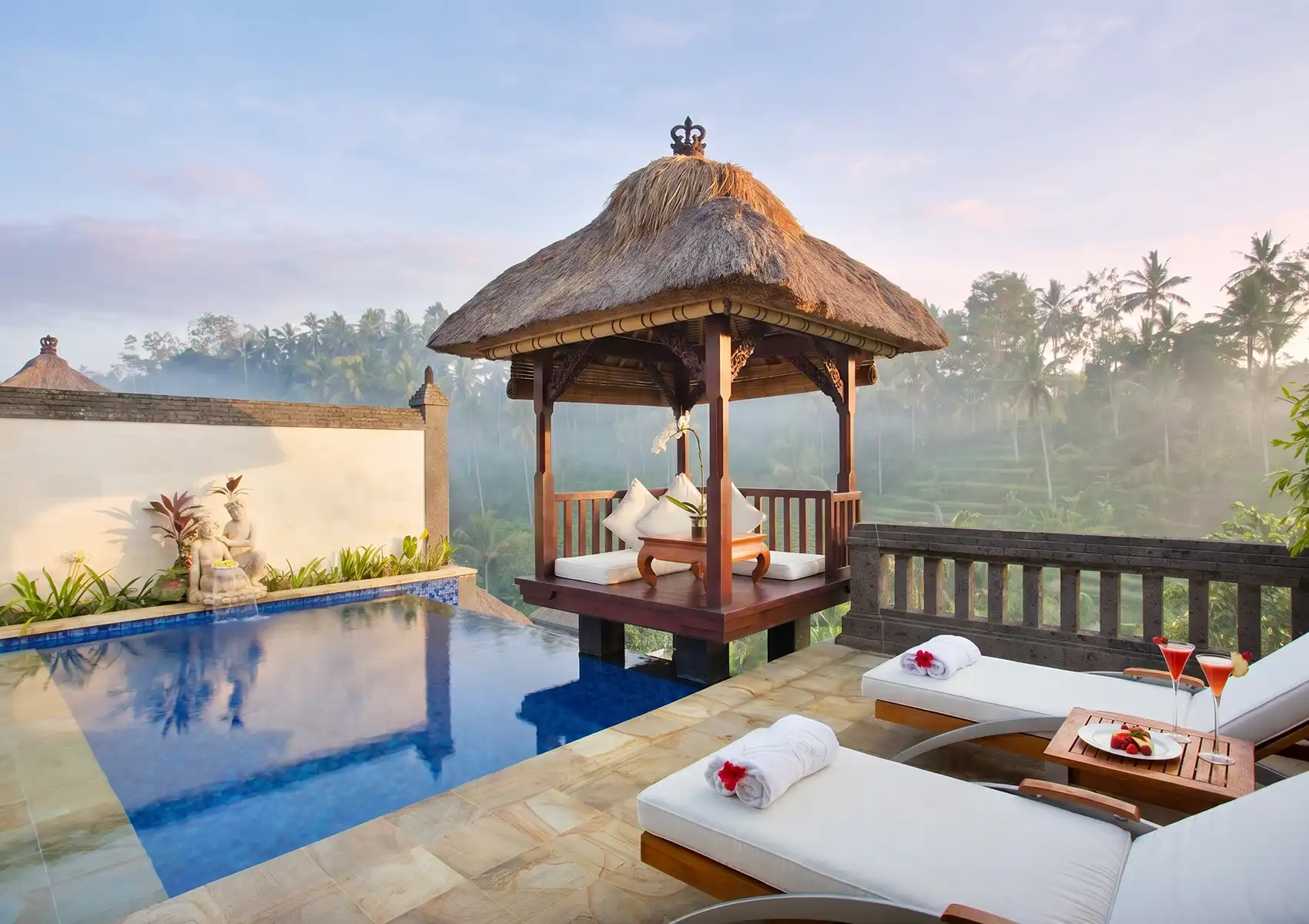
Most guests arrive at Viceroy Bali and are immediately drawn to the view. The valley stretches below, thick with jungle, the river far beneath, the silence of the highland morning pressing in from all sides. What takes longer to understand is why this place feels so different from anywhere else in Ubud. The villas are beautifully designed. The service is deeply personal. But what most guests take longest to understand is something else entirely. It is the ground itself.
Viceroy Bali sits above the Valley of the Kings, as historians and locals alike have long called it.
A Location Unlike Any Other in Ubud
Ubud’s landscape is one of layered greens. Jungle canopy, rice fields terraced into hillsides, river gorges dropping sharply into the earth. The Valley of the Kings sits within all of this, where the Petanu River gorge falls away below the ridge on which Viceroy Bali stands.
The Petanu River gorge drops sharply below, creating a sense of depth, silence, and verticality that gives this specific ridge its distinctive character. The sound of the river rises from the gorge. The mist fills it at dawn. In the evening, the valley holds the last light long after the surrounding land has darkened.
This is not simply a scenic view. It is a location with thousands of years of human significance.
Understanding the Valley of the Kings
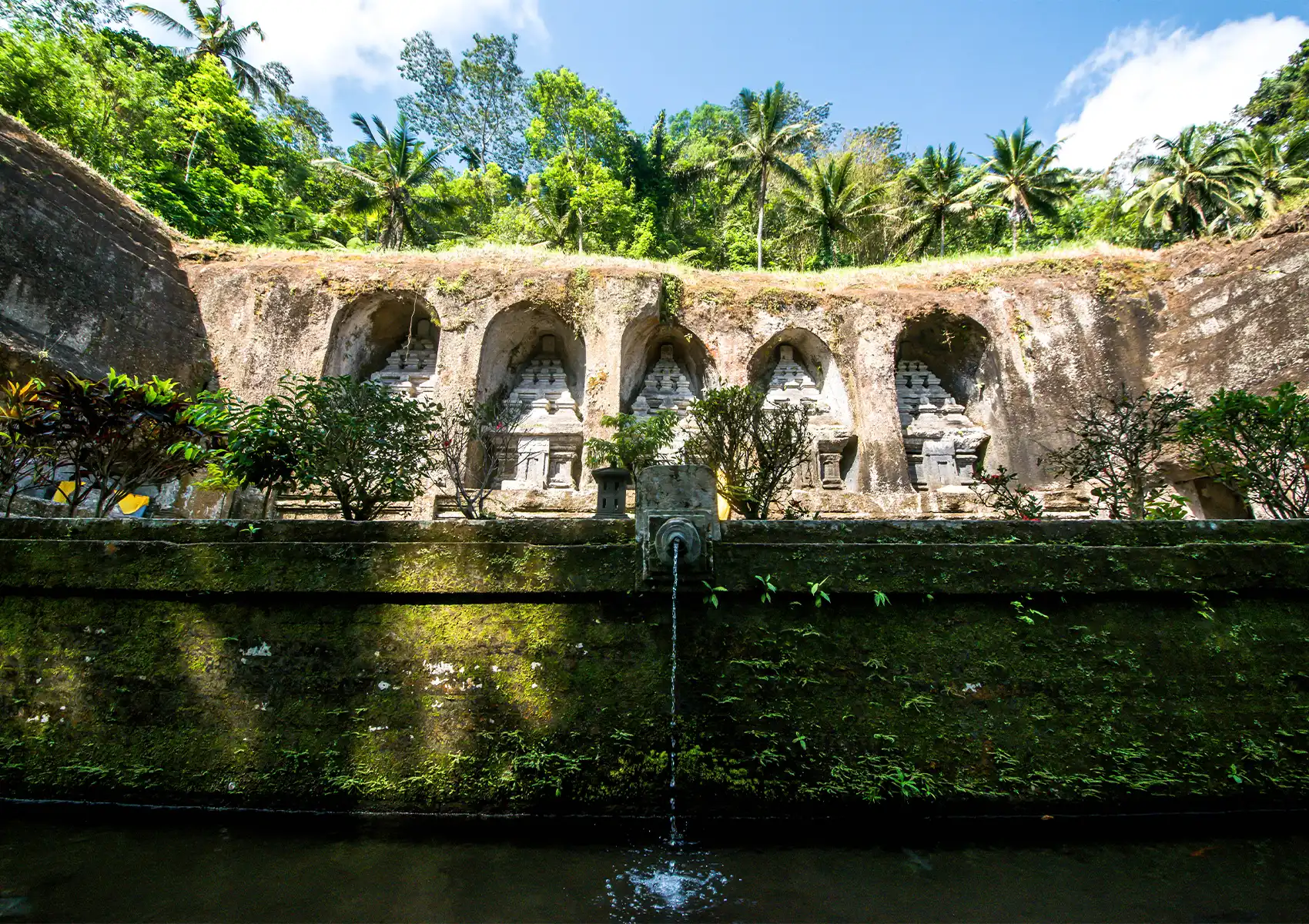
The name “Valley of the Kings” refers to two connected yet distinct places in the Ubud landscape. The first is Gunung Kawi, the 11th-century temple complex carved into the cliffs above the Pakerisan River, northeast of Ubud. Popularly known as the Valley of the Balinese Kings, Gunung Kawi comprises ten rock-cut shrines dedicated to King Anak Wungsu of the Udayana dynasty and is the most historically documented site bearing this name in the region.
The second is the broader archaeological zone between the Petanu and Pakerisan rivers, the two waterways that define this part of the Ubud landscape. This wider area, which includes the gorge below Viceroy Bali, was once known as Bali’s valley of kings, rich in ancient Hindu and Buddhist temples, prehistoric relics, and the ruins of stone-carved palaces. It is within this historically significant zone that Viceroy Bali sits, on the edge of the Petanu River gorge, above a landscape that has carried the weight of Balinese royal history for more than a thousand years.
The Ancient Valley
The area between the Petanu and Pakerisan rivers is among Indonesia’s most significant archaeological zones, protected by antiquity law. The land holds temples, sacred bathing pools, meditation caves, and stone-carved shrines dating back to the 8th century and beyond.
The Petanu itself carries a name that reflects its ancient importance. In Balinese, it is sometimes called the River of the Curse, its waters bound up in the legend of Mayadenawa, a king of extraordinary power who banned all religion on the island and was eventually defeated by the God Indra. According to legend, the river was formed from Mayadenawa’s blood as he fled across the highland landscape. The water has been considered sacred ever since.
The wider area, centered on the village of Bedulu just east of Ubud, was once the political and spiritual capital of Bali. The Pejeng Dynasty ruled here, with the kingdom of Bedahulu at the heart of what historians call Bali’s ancient valley of kings. Inscriptions, temples, and prehistoric relics found between the two rivers trace more than a thousand years of royal and spiritual life on this ground.
In 1343, the Javanese Majapahit empire conquered the last of the Pejeng kings, and a new era of Balinese culture began. The ancestry of Ubud’s aristocratic families today traces directly to this period. The valley has been shaped by that history ever since.
What Still Stands
Several of the most significant historical sites in Bali are a short drive from Viceroy Bali, each connected to the ground on which the property stands.
Goa Gajah
The Elephant Cave was built at the confluence of the Petanu River and an underground river, a location considered sacred in Balinese tradition as the meeting of opposing forces in a state of natural balance. Shiva priests and Buddhist monks used it as a place of retreat.
Gunung Kawi
The site most closely associated with the name “Valley of the Kings”. Its ten rock-cut shrines dedicated to King Anak Wungsu and his family are carved into the cliffs above the Pakerisan River. Visitors descend hundreds of steps into the river valley to reach the complex, where the scale of the carved cliff face gives a genuine sense of the royal ambition that shaped this landscape.
Pura Tirta Empul
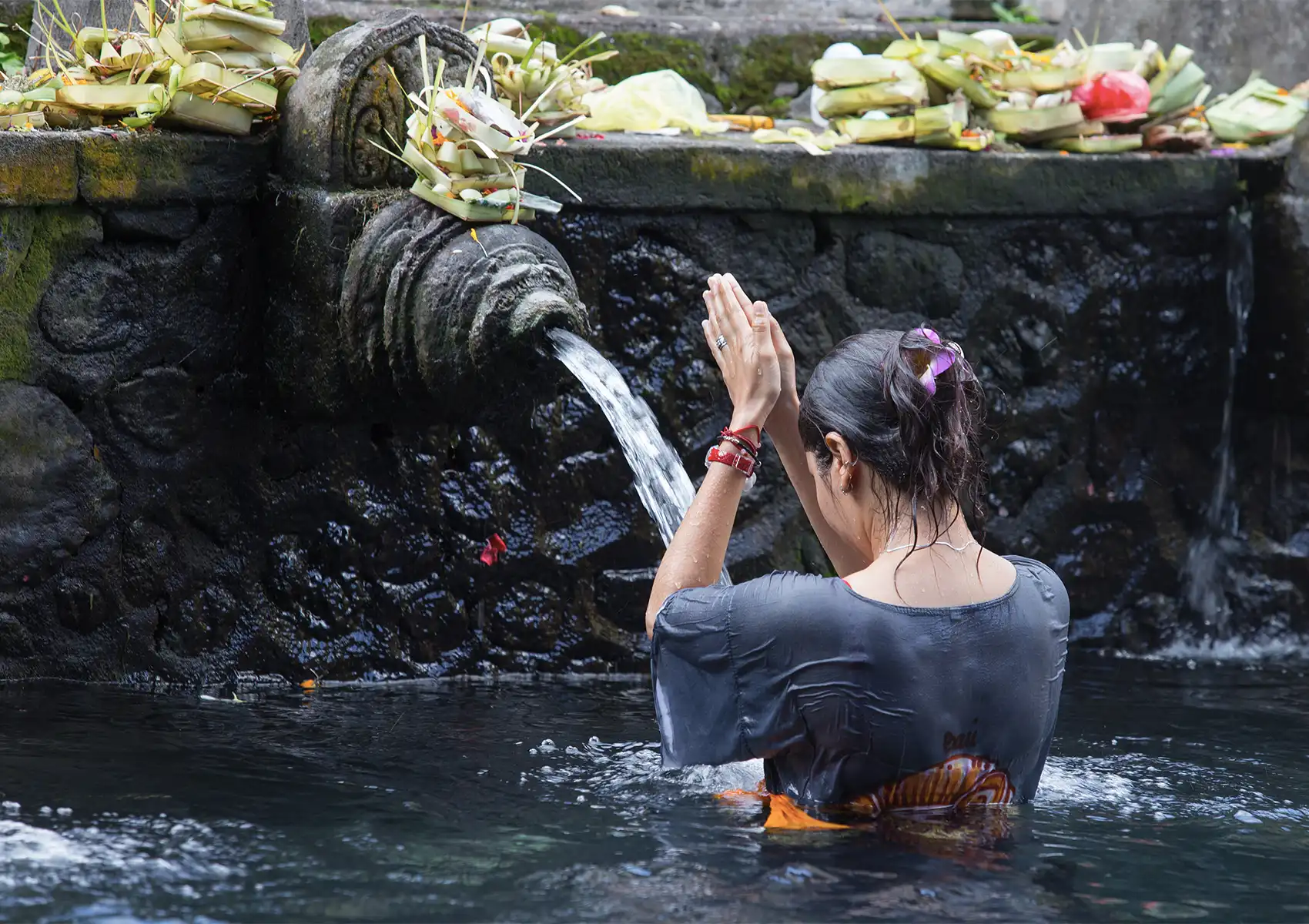
One of the five most sacred temples in Bali. In Balinese, its name means “water gushing from the earth,” and its spring-fed purification pools are dedicated to Vishnu, the Hindu God of water. Balinese Hindus travel from across the island to bathe in the sacred pools as part of a purification ritual known as melukat. According to legend, the sacred spring was created by Indra himself, who pierced the ground with his staff to heal his armies after Mayadenawa poisoned the surrounding rivers.
A Property Shaped by Its Location

Staying at Viceroy Bali, a boutique hotel in Ubud, means occupying a ridge above all of this. The privately leased frontage land ensures that the valley views remain unobstructed and the gorge below untouched. The traditional alang-alang thatched roofs of the villas, maintained by local craftsmen from the surrounding villages, reflect a Balinese architectural tradition that has defined the highland landscape for centuries, the same tradition seen in the sacred pavilions and communal structures of the villages below.
The property itself carries that sense of historical awareness in everything from its architecture to its name. Viceroy refers to the king’s governor, a title with its own historical weight in this specific landscape. Sitting above a valley once ruled by the kings of ancient Bali, the name was not chosen without awareness of its location.
The silence here is not the silence of isolation. It is the silence of a place that has been significant for a very long time.
Stay Above the Valley
Viceroy Bali sits above the Valley of the Kings, where the gorge below has been significant for more than a thousand years. To arrange your stay or plan your itinerary before arrival, contact the reservations team at res@viceroybali.com.
Frequently Asked Questions
What is the Valley of the Kings in Ubud?
The Valley of the Kings refers to the historically significant area between the Petanu and Pakerisan rivers near Ubud, once the center of Bali’s ancient royal kingdoms. The area contains some of Bali’s most important archaeological sites, including Goa Gajah, Gunung Kawi, and Pura Tirta Empul.
Where is Viceroy Bali located?
Viceroy Bali sits above the Valley of the Kings, 10 to 15 minutes by car from central Ubud, where every villa faces the same valley that kings once ruled.
What makes the location of Viceroy Bali different from other properties in Ubud?
Viceroy Bali is perched at the edge of the Petanu River gorge, a geographically and historically distinct position above a valley with thousands of years of royal and spiritual significance. The privately leased frontage land ensures the valley views remain unobstructed and the gorge below untouched. It sits within reach of Goa Gajah, Gunung Kawi, and Pura Tirta Empul, three of Bali’s most historically significant sites, all located within the ancient landscape between the Petanu and Pakerisan rivers.”
Can guests visit the historical sites near Viceroy Bali?
Yes. The guest services team can arrange a guided circuit that covers Goa Gajah, Gunung Kawi, Pura Tirta Empul, and other sites in the valley.