A Jewellery Making Class in Bali That Begins in Celuk
In Celuk, you hear the work before you see it. Small hammers on silver, struck in a steady rhythm from open workshops set behind family compounds along the road south of Ubud. The sound stops when a piece is turned over in the hand, then starts again.
Silver has been worked here for generations. The skill is held inside families and passed between them, learned at a low bench beside someone who has already spent decades at it. This is daily work rather than a performance for anyone passing, and it is the reason the island is known for the detail in its jewellery at all.
Most visitors meet the tradition through glass. A finished piece lifted from a velvet tray and turned under a light tells you very little about the hours behind it. Taking a jewelry-making class in Bali closes that distance and gives you a seat at the bench. Viceroy Bali, the boutique retreat above the Valley of the Kings, arranges a morning of exactly that.
The Silver Villages in the South of Ubud
Celuk sits in Gianyar, on the old road between Ubud and Denpasar, and it belongs to a group of villages that each hold a single line of work. Mas carves wood. Batuan paints. Celuk shapes metal. The specialisation is old enough that it still orders the road, workshop after workshop, for most of the length of the village.
Metalwork in Celuk has long been associated with the Pande, the clan of smiths, whose forebears made ceremonial blades, temple fittings and ornaments for royal households before any of it was made for visitors. That older purpose still sets the standard. A piece made to be worn at a temple ceremony has to hold up under daylight and attention, and the habit of working to that level did not leave when the tourists arrived.

Two techniques give Balinese silverwork its character. Jawan uses minute grains of silver, each one placed and fused by hand until a pattern reads as texture across the whole surface. Filigree draws silver into fine wire, then bends and sets it into openwork light enough to see through. Neither can be hurried. An artisan learns the first motions as a teenager and is still refining them thirty years later.
The Hours Behind a Finished Piece
A finished piece gives almost nothing away. Granulation looks like one decision rather than a thousand of them. A woven chain looks like a single object rather than a hundred links set in sequence by hand. Half a day at the bench changes the way you read every case you stand in front of afterwards.
That is the part worth arranging in advance. Several workshops along the main road in Celuk welcome visitors to stand and watch, and an unhurried walk there will show you more than any showroom. For a guided session at the bench itself, the boutique retreat arranges a place for guests at the John Hardy Kapal Bamboo Boutique and Artisan Workshop, where the same techniques are practised daily and taught one-to-one by a Master Artisan.
A Morning at the Workbench
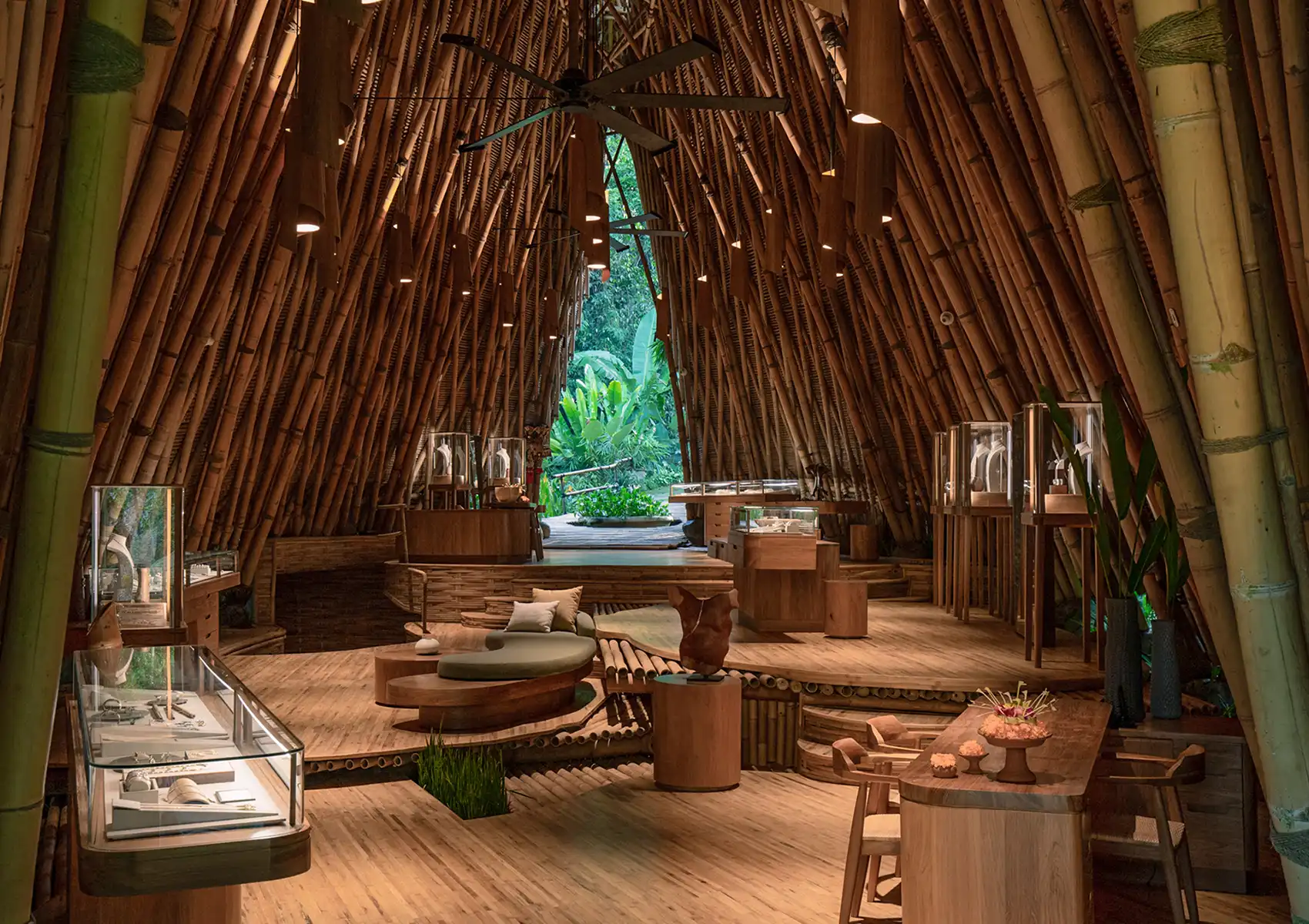
The workshop stands in Mambal, in Badung’s Abiansemal district, in a bamboo building raised among the rice terraces. A visit opens with a walk through the artisan workshop, past each stage of making, and ends in the archive, where older designs sit alongside the traditions that produced them.
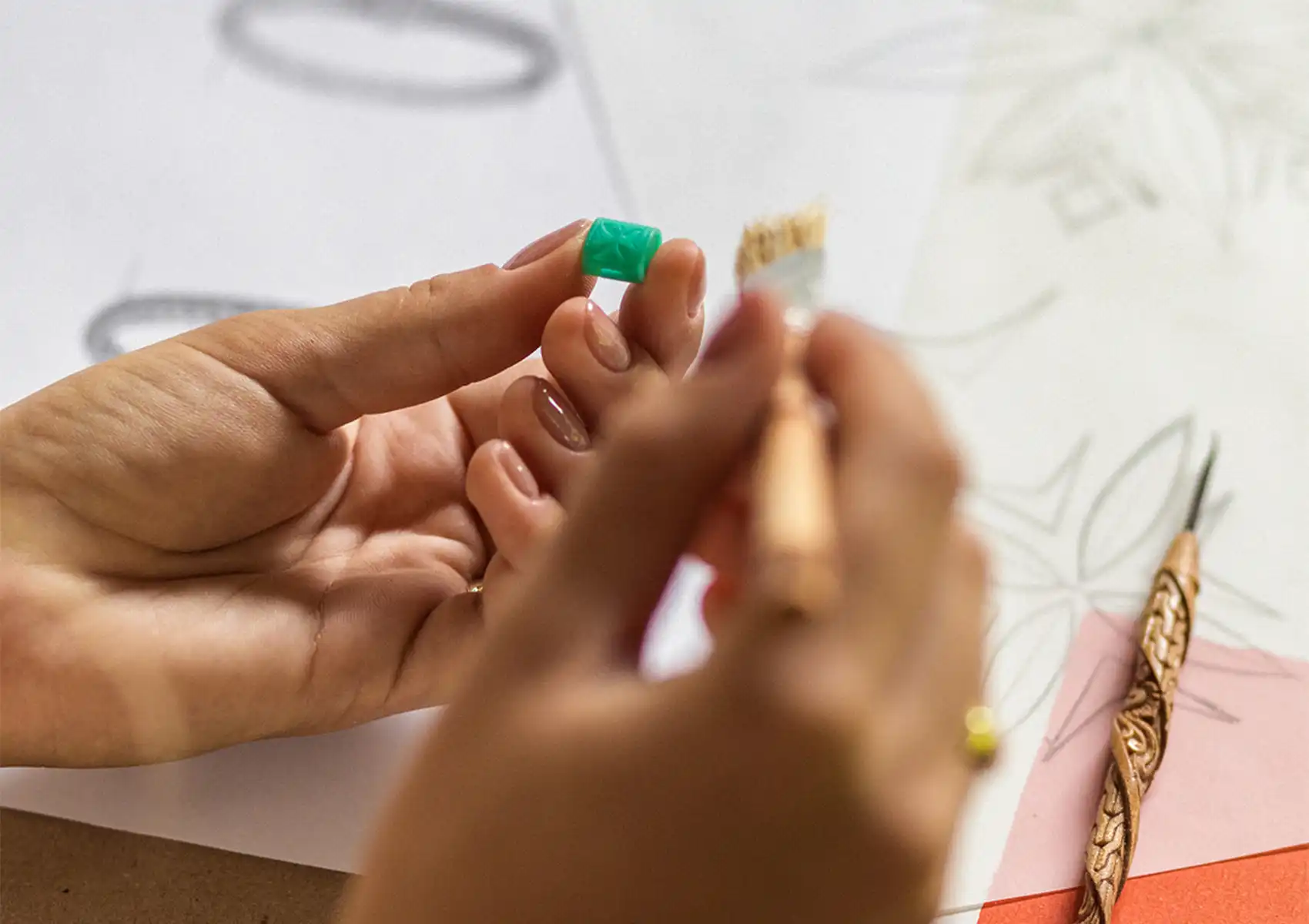
The Immersion Masterclass takes you into the process under the guidance of a Master Artisan. It begins with a design drawing and a watercolour rendering, so the piece is settled before any metal is touched. Wax carving follows, then the weaving of the signature chain, then hand finishing. It runs about four hours on weekday mornings and closes with a family-style Long Table lunch at the atelier, which makes the morning as much about the table as the bench.
The Customization Masterclass is the quieter option, one artisan to one guest, from first idea through watercolour, wax and weave. The artisans complete the piece after you leave and ship it within roughly eight to twelve weeks.
Reservations are made through the boutique retreat at least two working days ahead. Mornings fill through high season, so it is worth fixing the date before arrival.
The Return to the Valley
A morning of shaping silver changes the afternoon that follows it. The road climbs north again, the rice terraces give way to the ridge, and the hours slow on arrival.
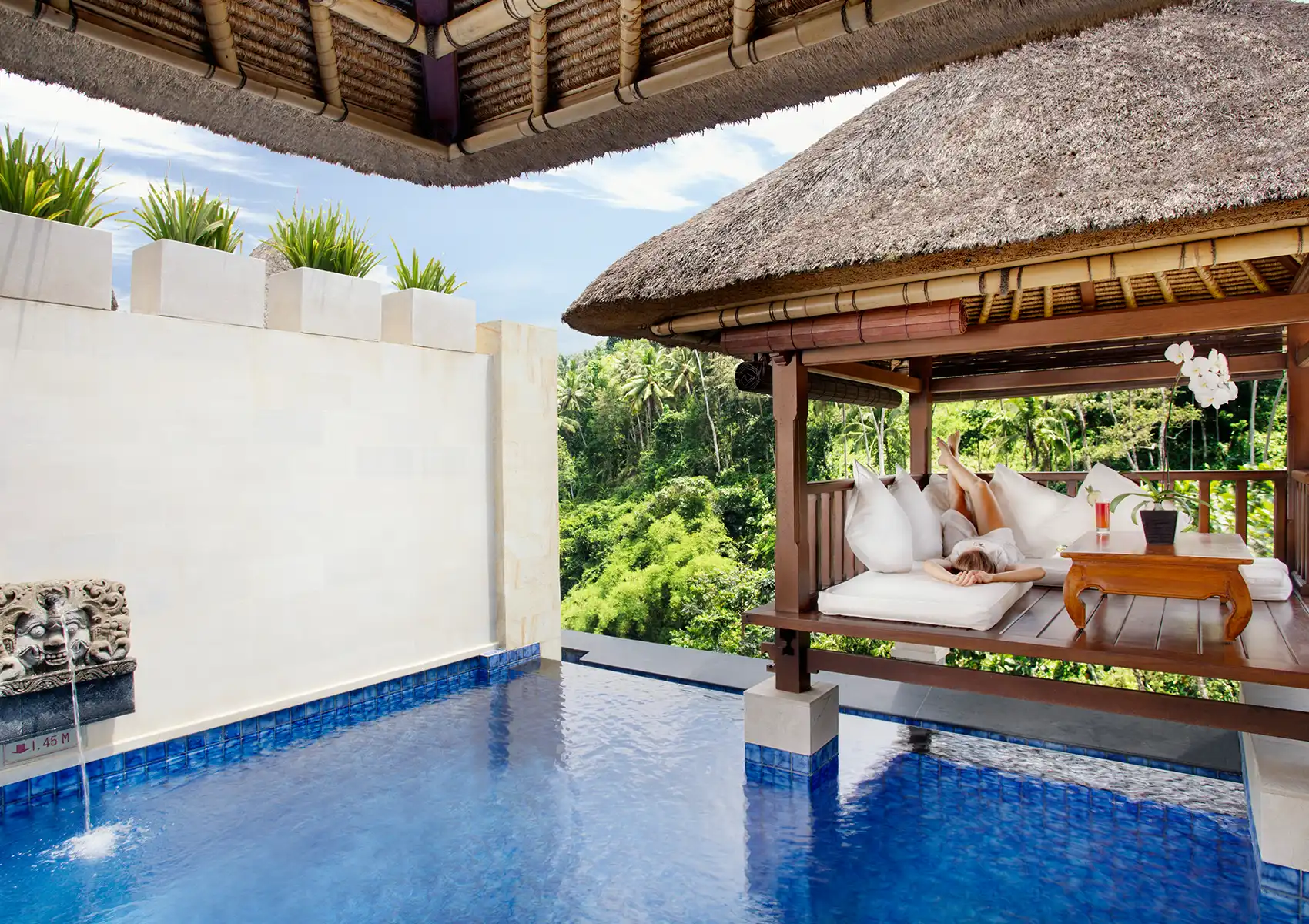
The same regard for handwork runs through the boutique retreat. The glassware is handblown by Bali Sama Sama from 100% recycled glass. The alang-alang thatch on the villa roofs is maintained by craftsmen from the surrounding villages, replaced by hand as it weathers. Very little on the property arrived from a catalogue, and that is deliberate.
The villa pool is heated, so the water is ready whenever you are, and the gorge drops away below the terrace. Dinner can be Indonesian at CasCades Restaurant & Bar, where the Royal Balinese Rijsttafel runs to nine courses, or a tasting menu at Apéritif Restaurant, prepared under the culinary artistry of the Apéritif team and guided by one philosophy. European Technique. Indonesian Soul.
You leave with the piece in your hand and some sense of the choices behind it, which is a different way of seeing the island than a shop window allows.
Arrange Your Stay and Bring Home a Piece of Bali
Frequently Asked Questions
Where can visitors see jewellery making in Bali?
Celuk in Gianyar is the centre of silver and gold work on the island, with family workshops, galleries and showrooms along its main road and the lanes behind it. Many welcome visitors to stand and watch. For a guided session at the bench, guests of the boutique retreat can join a masterclass at the John Hardy Kapal Bamboo Boutique and Artisan Workshop, which includes a tour of the artisan workshop and archive.
Which techniques are traditional to Balinese silver jewellery?
Two in particular. Jawan sets minute grains of silver by hand to build pattern and texture across a surface. Filigree draws silver into fine wire that is bent and set into openwork. Both are still taught in Celuk and both take years at the bench before the hand is steady enough to work quickly.
What happens at the John Hardy Immersion Masterclass?
The session covers several stages of making under the guidance of a Master Artisan, beginning with design drawing and watercolour rendering, then wax carving, icon chain weaving and hand finishing. It runs about four hours on weekday mornings and includes a family-style Long Table lunch at the atelier. The Customization Masterclass is the one-to-one alternative, with the finished piece shipped in roughly eight to twelve weeks.
How do Viceroy Bali guests arrange the masterclass?
The visit is arranged through Viceroy Bali as part of the guest experiences programme. Reservations are required at least two working days in advance, so it is best requested before arrival or early in the stay.