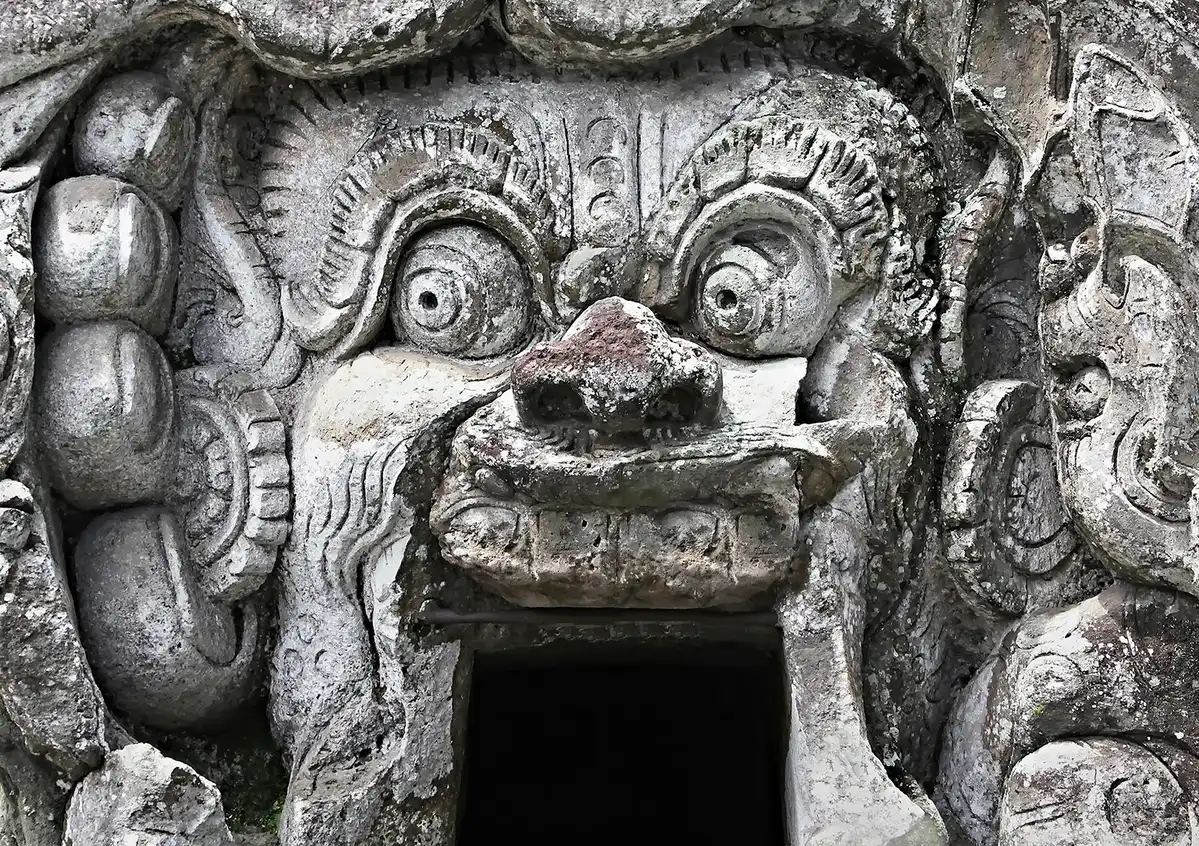
The King Behind the Name of Bedulu Village
If you head east from Ubud, you’ll pass through Bedulu. Today, it looks like an ordinary village, but it’s home to some of Bali’s most important archaeological and religious sites. These places give us a glimpse into a time when this area was part of an early Balinese kingdom.
According to local tradition, Bedulu is the same as Bedahulu, a royal centre that existed before the Majapahit conquest of Bali in 1343. Around Bedulu and nearby Pejeng, you’ll find ancient sanctuaries, temple complexes, and stone monuments that are part of Bali’s early history.
The village’s name is also tied to a story about its legendary king, Dalem Bedaulu. Local tradition says he had a supernatural power, which ultimately led to his downfall.
The Capital Before Ubud
Bedulu and the nearby village of Pejeng were once part of an important early political and religious centre in Bali. Historical traditions describe Bedahulu as a kingdom that included several nearby settlements, though historians still debate exactly how large it was and where its royal capital stood.
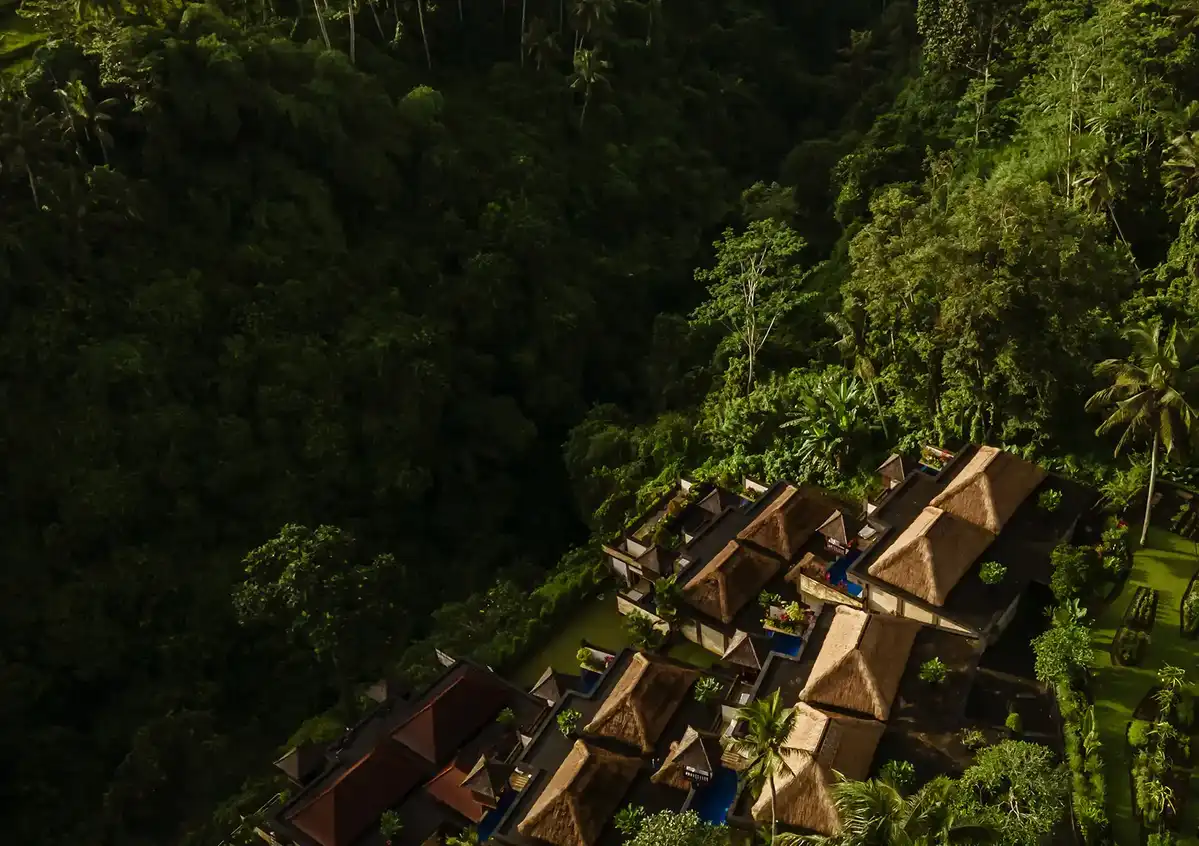
The Petanu and Pakerisan rivers run through a landscape filled with archaeological and religious sites. These include Goa Gajah, the sacred Pura Tirta Empul further north, and the royal memorials at Gunung Kawi.
Goa Gajah is an ancient sanctuary carved into the rock at Bedulu. Gunung Kawi is famous for its large shrines cut into the cliffs above the Pakerisan River. Along with other remains around Pejeng, these sites show the area’s deep religious and cultural roots.
The name Valley of the Kings is used for Gunung Kawi and the surrounding historical landscape. The Petanu gorge below the ridge at Nagi is also part of this historic landscape.
Bedulu, Pejeng, and Ubud each sit in different parts of this landscape, but their histories are linked by the political and cultural changes that shaped the region.
The King Who Changed His Head
The king behind the name was Dalem Bedaulu, also known in some records as Sri Astasura Ratna Bumi Banten. He isn’t remembered for a treaty or a temple, but for his head.
The story, found in the babad and still told in the village, says he had a secret power. He could remove his head from his shoulders and send it away while his body stayed in meditation. The head would return before anyone noticed.
In one version, the king’s attendant accidentally loses the head in the Petanu River. Unable to get it back, the attendant replaces it with an animal’s head, usually said to be a pig.
The king wakes up with the animal’s head. Ashamed, he tells his subjects not to look at him directly. People are expected to keep their eyes down when they approach.
The secret comes out when Gajah Mada, a famous figure from the Majapahit kingdom in Java, visits the court. The legend says he manages to see the king’s face and discovers the strange head.
This is where the name comes from. In Old Javanese and Balinese, bedah hulu is understood locally to mean an altered or severed head. This story gives a folkloric explanation for how Bedulu got its name, though the exact origin isn’t certain.
The legend isn’t meant to be taken as literal history. Instead, it keeps alive the traditional story of Dalem Bedaulu, his unusual powers, and the beliefs tied to his rule.
The Last of the Pejeng Kings
The envoy returned with an army. In 1343, Majapahit forces led by Gajah Mada came to Bali, and the kingdom of Bedahulu fell. Dalem Bedaulu was the last of his line.
The defeat didn’t happen in battle. Bedahulu’s strength partly came from its commander, Kebo Iwa, a legendary figure in Bali. Stories say he was incredibly strong and helped protect the kingdom. In some versions, he was invited to Java and killed there by trickery, which weakened Bali’s defences before the conquest.
The conquest led to big political changes in Bali. A new royal line linked to Majapahit was set up, first at Samprangan, then later moving to Gelgel and Klungkung.
Ubud’s later royal history is tied to these changes in Bali’s leadership. It starts with the kingdom that was defeated. While it’s not a direct continuation of Bedahulu, it’s part of the bigger story of royal families and shifting centres of power on the island.
What Still Stands at Pejeng
Goa Gajah is where two streams meet above the Petanu, just below the road between Bedulu and Ubud. The cave entrance is carved into the rock and leads to a chamber once used for meditation. The bathing pools in front were buried until the 1950s.
The site is important for both its architecture and its history. Goa Gajah is mentioned as Lwa Gajah in the Nagarakretagama, a 14th-century Old Javanese poem that describes places and politics during the Majapahit era.
North of Bedulu, Pejeng has several important archaeological and religious sites.
Pura Penataran Sasih is home to the famous bronze drum called the Moon of Pejeng, a key artefact from Bali’s prehistoric times. Pura Kebo Edan has a stone figure over three metres tall. The Gedong Arca museum in Bedulu keeps sarcophagi and carved pieces found in the nearby fields.
These sites show different periods of Bali’s history, not just one royal era. Their importance comes from the archaeological remains, religious traditions, and historical links they keep alive.
Many of the temples are still active places of worship. Daily religious practices continue there, alongside visits from people interested in Bali’s culture.
Together, Bedulu and Pejeng give a closer look at the historical landscape linked to the kingdom of Bedahulu and the traditions that grew around it.
History You Can See From the Villa
Viceroy Bali is on the ridge at Nagi, overlooking the Petanu gorge. It’s about five to ten minutes by car from central Ubud, depending on traffic. From here, you can see across the valley and easily drive to Bedulu, Pejeng, and other historic sites nearby.
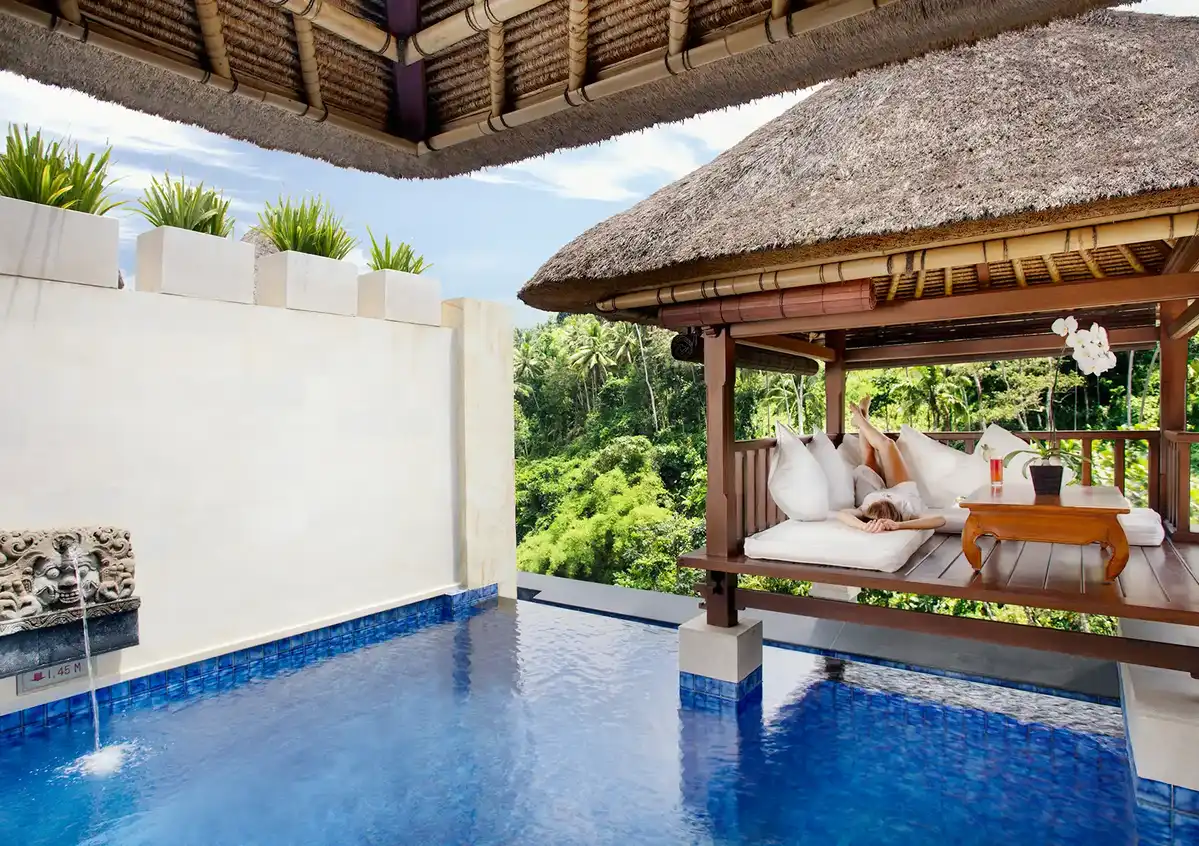
As a boutique retreat in Ubud, we have forty private pool villas, each with a heated pool. The land below the property is privately leased, helping preserve the open outlook across the gorge.
From this part of Ubud, you can reach Bedulu’s archaeological sites and Pejeng’s temples by car. It’s easy to explore the area’s history while staying above the Petanu gorge.
Stay Within the Old Kingdom
You can also explore the surrounding landscape through the retreat’s dining venues.
CasCades Restaurant & Bar offers the Royal Balinese Rijsttafel, a nine-course meal of traditional Indonesian dishes. You can also watch Balinese dance every Monday at 7:30 pm.
Apéritif Restaurant blends European technique with Indonesian flavours in its five- and seven-course tasting menus. The food combines European cooking methods with Indonesian ingredients and influences.
Viceroy Bali can be a great base if you want to explore Bali’s early history. It overlooks the Petanu gorge and is within driving distance of Bedulu, Pejeng, and other historic sites near Ubud.
Visit Viceroy Bali for more information about accommodation and reservations.
Frequently asked questions
What does the name Bedulu mean?
Bedulu comes from bedah hulu, carrying the sense of a head opened, cut or changed. It points to the legend of Dalem Bedaulu, the king said to have been given the head of a pig.
Who ruled Bali before Majapahit?
The Pejeng dynasty, whose kingdom was called Bedahulu, ruled the land between the Petanu and Pakerisan rivers until Majapahit forces under Gajah Mada defeated its last king in 1343.
What is there to see in Bedulu today?
Goa Gajah, the ninth-century cave and bathing pools, sits at the edge of the village. North at Pejeng are the Moon of Pejeng at Pura Penataran Sasih and the Gedong Arca museum.
How far is Bedulu from Viceroy Bali?
A short drive. Viceroy Bali sits at Nagi on the ridge above the Petanu gorge, five to ten minutes from central Ubud, with Bedulu a similar distance beyond.