
What to Eat for Breakfast in Bali
The first morning of a trip to Bali does something specific to you.
You wake up earlier than you planned. The air outside is different. The sounds are different. And before anything else happens, before the temples and the rice paddies and the things on your list, there is the question of what to eat.
Breakfast in Bali is not a simple answer. It depends entirely on where you are, what you want, and how much of the island you want to feel before 10 am. You can eat rice at a roadside warung for the equivalent of one dollar. You can float in your private villa pool while a tray of gourmet pastries, tropical fruit, and fresh-brewed coffee arrives beside you. Both are breakfast in Bali. Both are worth knowing about.
This guide covers all of it.
What Is a Typical Breakfast in Bali
Most visitors expect breakfast in Bali to look like the breakfast they know at home. It does not, and that is the point.
For the Balinese, breakfast is a full meal. Not toast. Not cereal. A proper, cooked, rice-based meal eaten early in the morning, often before work or temple obligations begin. The Balinese do not sharply distinguish between breakfast, lunch, and dinner in terms of what is cooked. What appears on the morning table looks very much like what appears at any other meal.
This comes from something deeper than habit. Balinese culture is rooted in the philosophy of Tri Hita Karana, the three causes of goodness, which centres on harmony between people, nature, and the divine. Food is part of that harmony. Eating well and eating together has spiritual as well as practical significance on the island. A morning meal is not rushed. It is not eaten standing up. It is the first act of the day, and it is taken seriously.
The dishes that appear most often at a traditional Balinese breakfast are also those that feature throughout the day.
Nasi Goreng is the most recognised. Fried rice cooked with shallots, garlic, chilli, and sweet soy sauce, topped with a fried egg and often served with prawn crackers on the side. It is savoury, satisfying, and deeply aromatic. Almost every warung in Bali serves it, and almost every version is slightly different. The quality of nasi goreng tells you a great deal about the kitchen that makes it.
Nasi Campur is the other essential. Mixed rice with small portions of various sides arranged around it: tempeh, sambal, vegetables, sometimes fish or chicken, sometimes tofu. It is the Balinese way of eating rice with variety. At breakfast, it tends to be lighter than the lunch version, but the principle is the same.
Bubur is congee, a rice porridge that is softer and more gentle on the stomach than fried rice. Popular for locals wanting something warm and comforting rather than spiced and substantial. Usually topped with fried shallots, spring onion, and a soft-boiled egg.
Jaje Bali is the catch-all term for Balinese snacks, and the breakfast versions are often sold at traditional morning markets. Small rice cakes, steamed parcels, and sweet glutinous rice in a banana leaf. They are not always easy to find outside local markets and warungs, but when you do find them, they are among the most genuinely Balinese food experiences on the island.
Nasi Jinggo is a specific Balinese dish: a small portion of white rice with chicken, beef, or pork, fried tempeh, and sambal, wrapped in a banana leaf. Inexpensive, portable, and sold early in the morning at street stalls and markets. For locals, it is breakfast on the way to work. For visitors, it is one of the most authentic things you can eat on the island.
Kopi Bali is Balinese coffee, and it deserves its own mention. Brewed by pouring hot water directly over finely ground coffee and leaving the grounds to settle at the bottom of the glass. Strong, earthy, and slightly sweet. You do not stir it. You do not drink the last sip. It is nothing like a flat white and entirely worth trying.
Where to Have Breakfast in Bali
The answer depends on what kind of morning you want.
At a local warung
A warung is a small, family-run eatery found everywhere on the island, from roadside stalls to simple open-air rooms with plastic chairs and handwritten menus. Breakfast at a warung means nasi goreng, nasi campur, or bubur, usually cooked to order, served quickly, and priced at somewhere between 15,000 and 40,000 Indonesian Rupiah. That is roughly one to three US dollars.
The experience is genuinely immersive. You eat what the locals eat, at the pace the locals eat it, in the kind of space that has not been designed for tourists. If you want to feel Bali before you experience the resort version of Bali, a warung breakfast is the place to start.
At a cafe in Seminyak or Canggu
The cafe culture in Seminyak and Canggu is one of the best in Southeast Asia. Breakfast menus here draw from Australian brunch culture, local Indonesian ingredients, and health-conscious cooking. Smoothie bowls, smashed avocado, truffle scrambled eggs, acai bowls, cold brew coffee, and fresh juices dominate the menus. All-day service blurs the line between breakfast and lunch in a way that suits the unhurried pace of Bali mornings perfectly.
Prices in this category run from around 80,000 to 200,000 rupiah per person for a main and a drink. A full breakfast for two with coffee typically costs somewhere between 300,000 and 500,000 Rupiah. For a full picture of what different meal experiences cost across the island, the Bali trip cost guide breaks it down clearly across every budget level.
At a hotel restaurant
Most mid-range and luxury hotels in Bali include breakfast as part of the stay or offer it as an add-on. The standard tends to be a buffet mixing Western options with Indonesian dishes. Quality varies significantly by property. At the better hotels, the breakfast buffet is genuinely good. At the lesser ones, it is the kind of buffet that reminds you why buffets are not always the answer.
In Ubud, surrounded by jungle
Ubud breakfasts tend to be quieter, more thoughtful, and more connected to the surrounding landscape. The cafes here lean toward organic ingredients, locally sourced produce, and a slower pace. A breakfast with a valley view in Ubud is a particular pleasure worth planning around.
The Floating Breakfast in Bali
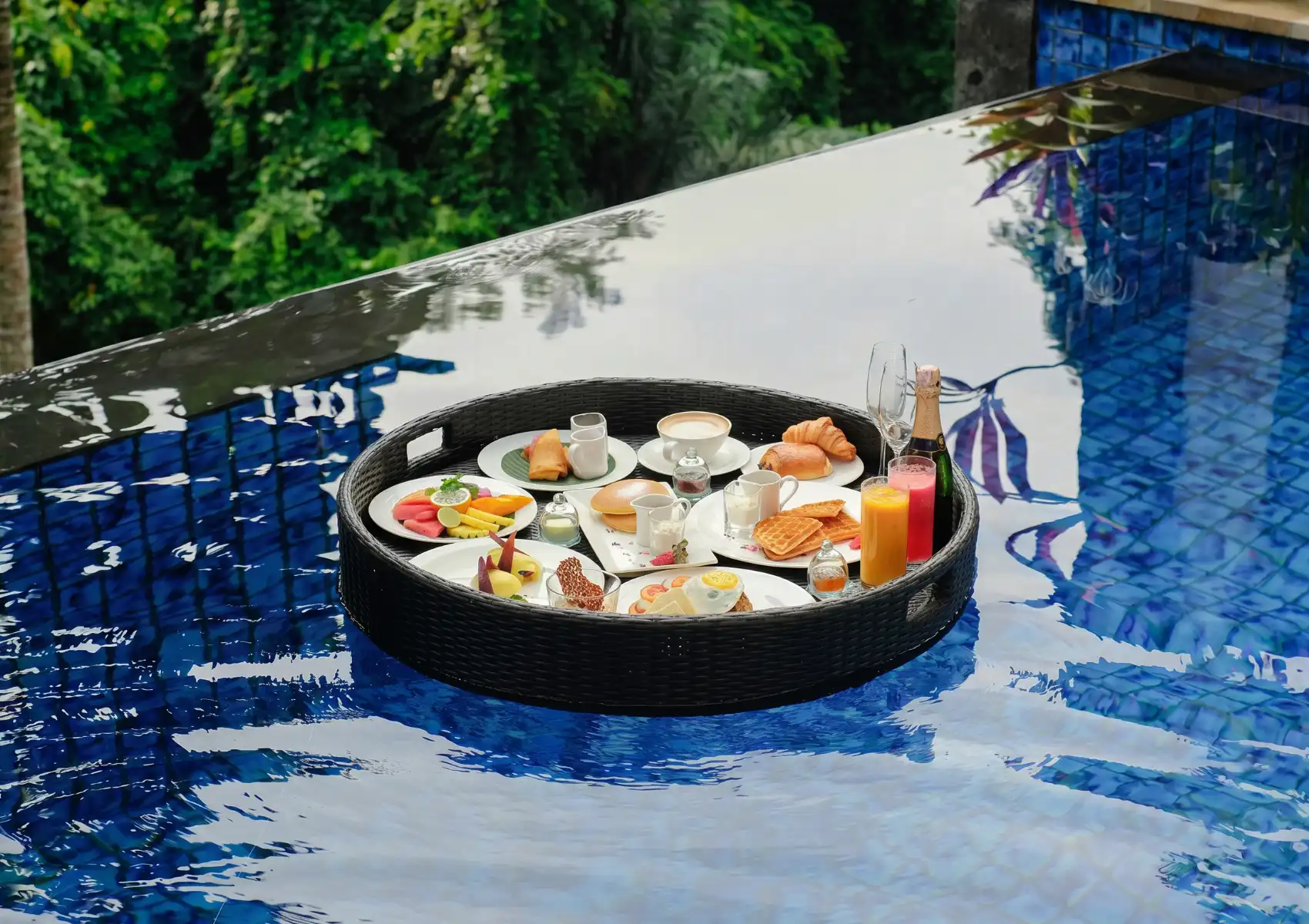
There is a category of breakfast in Bali that sits entirely apart from anything else on the island.
The floating breakfast is exactly what it sounds like. A tray arranged with breakfast, fruit, flowers, and coffee is floated in your private villa pool while you sit in the water beside it. It is deeply indulgent, visually extraordinary, and completely impossible to replicate at home.
It became one of the most recognised images from Bali on social media several years ago and has since become an iconic part of what the island offers for couples and honeymooners staying in private pool villas.
At Viceroy Bali, the floating breakfast in Ubud is one of the most requested experiences. Served in the privacy of your own villa’s infinity pool, the tray arrives adorned with fresh tropical fruit, buttery croissants, perfectly cooked eggs, and traditional Balinese specialities, alongside freshly brewed coffee, tea, or fresh juice. For the full indulgence, a glass of sparkling champagne can be added.
The setting matters here in a way that it does not at most breakfast options. Viceroy Bali sits above the Valley of the Kings, with jungle on all sides and the Petanu River valley stretching out below. The pool faces that valley. The morning light moves across it slowly. There is no traffic noise. There is very little noise of any kind.
This level of morning experience is what separates a genuinely exceptional resort from one with merely good facilities. It is the difference between a hotel and what people mean by a 7-star hotel experience, where every detail of the day, including how it begins, is treated as an occasion rather than a transaction.
What to Avoid at Breakfast in Bali
Breakfast in Bali is a highlight for many visitors, but a few simple precautions can help you avoid stomach issues sometimes referred to as “Bali belly.”
Common risk factors
“Bali belly” is a general term for gastrointestinal illness caused by unfamiliar bacteria, often linked to contaminated water or improper food handling. It doesn’t affect everyone, but it’s common enough to be aware of.
Typical triggers include:
- Tap water and anything made with it
- Ice made from unfiltered water
- Raw salads and pre-cut fruit washed in tap water
- Undercooked meat or seafood
- Food left uncovered or sitting out in the heat for long periods
Breakfast-specific advice
At breakfast, the main risks tend to be:
- Buffet food: Choose items that are freshly replenished and still hot. Avoid dishes that have been sitting out too long.
- Fresh fruit: Safer when it’s whole or freshly prepared in reputable cafés; be cautious with pre-cut fruit from lower-end spots.
- Street stalls / warungs: Raw garnishes and salads are higher risk here compared to established restaurants.
- Ice: Generally safe in reputable tourist cafés, especially when it’s clear cylindrical “factory ice.” When unsure, skip it.
Simple rule of thumb
If it’s freshly cooked, served hot, and comes from a busy, reputable place, it’s usually a safer breakfast choice than anything raw, pre-cut, or sitting at room temperature.
What is completely safe and should not be missed
Freshly cooked nasi goreng made to order at a busy warung is safe and delicious. Kopi Bali brewed from hot water is safe. Tropical fruit you peel yourself, bananas, mangoes, mangosteens, is completely safe and one of the best things about breakfast in Bali. Sealed bottled drinks, freshly brewed coffee, and tea are all safe choices at any establishment.
At Viceroy Bali, the tap water in every villa is filtered and safe to drink. The breakfast ingredients at CasCades Restaurant and across every in-villa dining experience are sourced from reputable local suppliers and prepared to international food safety standards.
Breakfast at Viceroy Bali
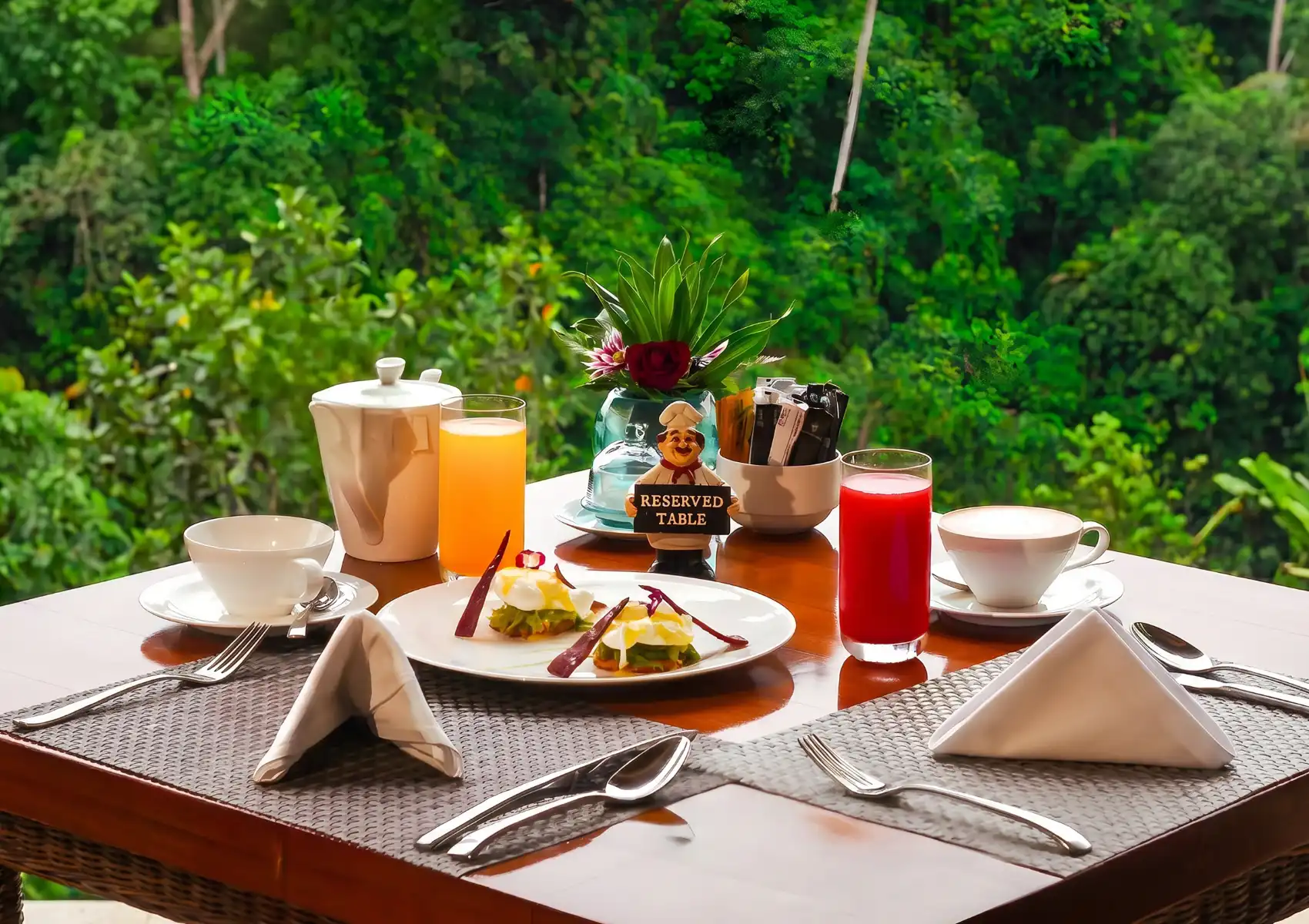
Breakfast at Viceroy Bali is available in three forms, and each delivers a genuinely different kind of morning.
CasCades Restaurant
CasCades is the resort’s all-day dining restaurant, set above the Valley of the Kings with panoramic jungle views across the Petanu River valley. Breakfast here is served as the morning mist begins to lift from the valley floor below. The menu draws from both Western and Indonesian traditions. Fresh tropical fruits, pastries, eggs cooked to order, traditional Balinese dishes, and Kopi Bali alongside speciality coffee.
Breakfast at CasCades sets a tone for the day that is difficult to replicate. The light at that hour, the view, the quiet, and the unhurried pace of the service combine into something that is genuinely one of the better breakfasts in Ubud.
The floating breakfast in your villa pool
The floating breakfast at Viceroy Bali is one of the experiences that guests most consistently describe as a highlight of their entire trip, not just their stay at the resort. A beautifully arranged tray of gourmet breakfast, fresh fruit, and coffee floated in your private infinity pool, above the valley, in the quiet of a Ubud morning.
In-villa breakfast on your terrace
For guests who want to eat without leaving their villa, in-villa dining is available throughout the day, including at breakfast. A full menu served on your private terrace, overlooking your heated pool and the valley below. The coffee arrives hot. The fruit is fresh. The service is unhurried.
This is the version of breakfast in Bali that most people picture when they imagine what a trip to the island could feel like at its best.
Start Your Morning the Right Way at Viceroy Bali
Breakfast in Bali can be many things. A bowl of nasi goreng is eaten at a plastic table by the roadside. A smoothie bowl in a sun-filled Canggu cafe. A hotel buffet that disappears into the background of the day.
Or it can be the moment you remember most clearly when the trip is over.
Floating in your private heated pool above the Valley of the Kings at Viceroy Bali, a tray of gourmet pastries, fresh tropical fruit, and freshly brewed coffee beside you, while the jungle stretches in every direction and the valley below still holds the morning mist.
That version of breakfast in Bali is available here. And it offers a very different way to begin the day.
Our guest service team is available to assist with any enquiries and can arrange floating breakfast, in-villa dining, and other details of your stay prior to arrival.
Get in touch with us by contacting our email res@viceroybali.com.
Frequently Asked Questions
What is a typical breakfast in Bali? ‘
A typical Balinese breakfast is a cooked rice-based meal rather than a light Western-style start to the day. The most common dishes are nasi goreng (fried rice with egg), nasi campur (mixed rice with various sides), and bubur (rice porridge). These are eaten at local warungs and street stalls alongside Kopi Bali, a strong Balinese ground coffee. Tourist-facing cafes in areas like Seminyak and Canggu serve a wider mix of Western brunch dishes and local Indonesian options.
Where should I have breakfast in Bali?
It depends on what you want from the morning. For an authentic local experience, a warung serving nasi goreng is the answer. For a cafe brunch in a social atmosphere, Seminyak and Canggu have excellent options. For a quiet morning with a valley view and a genuinely exceptional breakfast, Ubud and specifically Viceroy Bali offer something that the rest of the island cannot match.
What should I not eat in Bali to avoid Bali belly?
Avoid tap water, ice from unknown sources, pre-cut fruit or salads at street stalls which may have been washed in tap water, undercooked meat and seafood, and buffet food sitting at room temperature. Stick to freshly cooked hot food from busy and reputable establishments. At Viceroy Bali, all food and water meet international safety standards, and the tap water in every villa is filtered and safe to drink.
Is the floating breakfast in Bali worth it?
Yes. It is one of those experiences that sounds indulgent and turns out to be genuinely memorable. The combination of a private pool, a beautifully arranged breakfast tray, a jungle valley view, and an unhurried morning is difficult to replicate anywhere else. At Viceroy Bali, the floating breakfast is one of the most consistently praised experiences by guests and is worth requesting when you book.
How much does breakfast in Bali cost?
Breakfast in Bali ranges from around 15,000 Rupiah at a local warung to 200,000 Rupiah or more at a tourist-facing cafe in Seminyak or Canggu. Breakfast at a luxury resort like Viceroy Bali reflects the quality of ingredients, setting, and service. For a full breakdown of food costs across different types of establishments in Bali, the Bali trip cost guide covers every budget level in detail.
Can I have a floating breakfast at any hotel in Bali?
Not at every hotel, but at properties with private pool villas, it is commonly offered. The quality of the experience varies significantly by property. At Viceroy Bali, the floating breakfast is served in a private infinity pool overlooking the Valley of the Kings in Ubud. The setting, food quality, and service standards place it among the best floating breakfast experiences on the island.