Choosing a Sustainable Luxury Retreat in Bali
Sustainability is becoming an increasingly important consideration for travellers choosing where to stay in Bali. However, understanding what a hotel means when it describes itself as sustainable can take more than reading its website or promotional materials. The more useful question is how those commitments are put into practice.
Independent certification offers one way to assess a hotel’s approach. A sustainable luxury hotel in Bali should be able to demonstrate its commitment through independently verified standards, practical measures, and a clear approach to environmental and community responsibility. Viceroy Bali, the boutique retreat above the Valley of the Kings in Ubud, provides an example of how these elements can come together.
Verified Rather Than Claimed
One of the clearest ways to assess a hotel’s sustainability claims is to look for independent certification. The Global Sustainable Tourism Council sets globally recognised standards for sustainable tourism across four areas: sustainable management, socioeconomic benefits, cultural heritage, and environmental responsibility.
In June 2026, following an assessment by Control Union, Viceroy Bali became one of the first properties in Ubud to achieve GSTC Certification. The assessment included documentation reviews, staff interviews, supplier assessments, and on-site audits.
Independent assessment gives the guests a clearer basis for evaluating a hotel’s sustainability commitments. Viceroy Bali also publishes its 2025 Sustainability Report, allowing guests to look beyond the summary and see more detail about the property’s approach.
Viceroy Bali’s approach to sustainability builds on practices established since the property opened in 2005.
A Sustainable Luxury Hotel in Bali You Can Experience
GSTC Certification offers a way to assess a hotel’s sustainability commitments, while the measures in place show how those commitments translate into practice.
Viceroy Bali draws its water from a natural spring in the surrounding mountains, located 80 metres below the surface. The water is filtered and supplied as drinking water through the taps in every villa. Monthly water tastings are also carried out to monitor its quality.
The property has eliminated single-use plastic bottles across the resort. Each villa is equipped with a thermal water bottle and reusable tumbler, while Terra Water refill stations are available in public areas including CasCades Restaurant & Bar and Reception.

Bathroom amenities are provided in locally sourced refillable ceramic carriers rather than single-use plastic containers. At CasCades Restaurant & Bar and Akoya Spa, guests can also find handblown glassware made in Bali by Bali Sama Sama using 100% recycled glass. The property’s wastewater passes through an 18-step organic treatment system before the treated water is returned to the Petanu River.
Together, these measures allow guests to benefit from practical sustainability initiatives throughout their stay.
Built Into the Property
A property’s sustainability also depends on how it is designed, built, and maintained.
Viceroy Bali’s construction was planned around existing vegetation, with trees and bushes relocated. The property’s development also preserved the subak irrigation system serving the neighbouring rice fields.
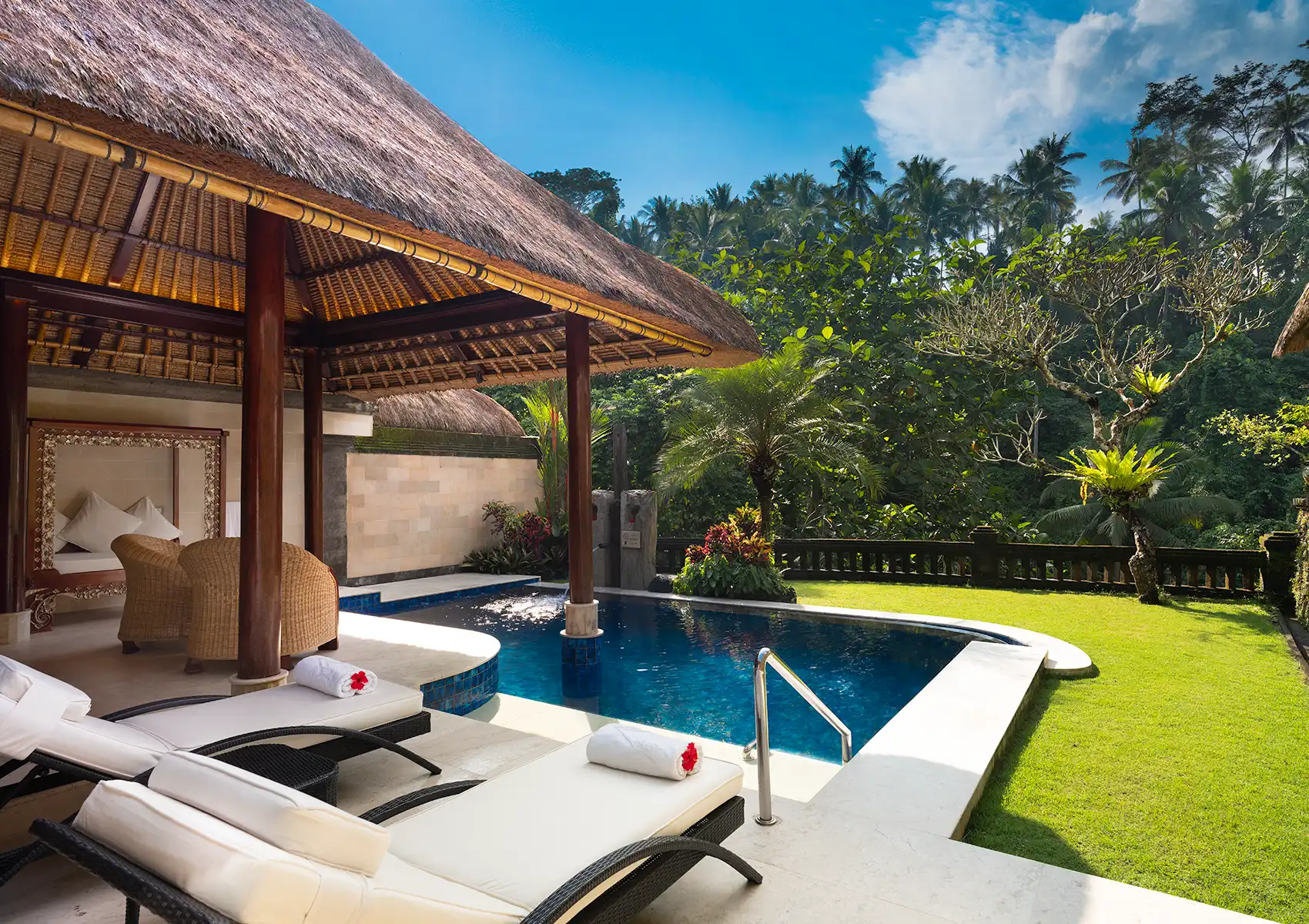
Traditional alang-alang thatched roofs feature across the property’s villas and public areas. Maintaining these roofs involves local craftsmen from surrounding villages, helping preserve traditional Balinese building skills while providing ongoing work.
Energy efficiency is another part of the property’s sustainability approach. Solar panels are installed throughout the resort, while double glazing with reflective glass helps reduce heat entering the villas. The air-conditioning system also reuses excess heat to warm the water supply. Viceroy Bali also works with local sustainable engineering firm Eco-Mantra to develop its approach to sustainable property management.
The Community Behind the Ridge
Sustainability also extends beyond energy and waste. As a boutique retreat in Bali, the people and communities around the property are an important part of the picture.
At Viceroy Bali, 37% of the team is from Petulu, with other team members coming from neighbouring communities. The property also prioritises internships for Indonesian and local community students, with some interns later joining the team full-time.
Used cooking oil from the kitchens is collected through Noovoleum and recycled. The proceeds from the recycled cooking oil support Yayasan Green Books Indonesia, which runs environmental education programmes that have reached 2,298 students across eight schools.
The property also holds monthly clean-up sessions in the surrounding village and along the road leading to the resort. Together, these initiatives support environmental education and community involvement beyond the property’s day-to-day operations.
Arriving the Considered Way
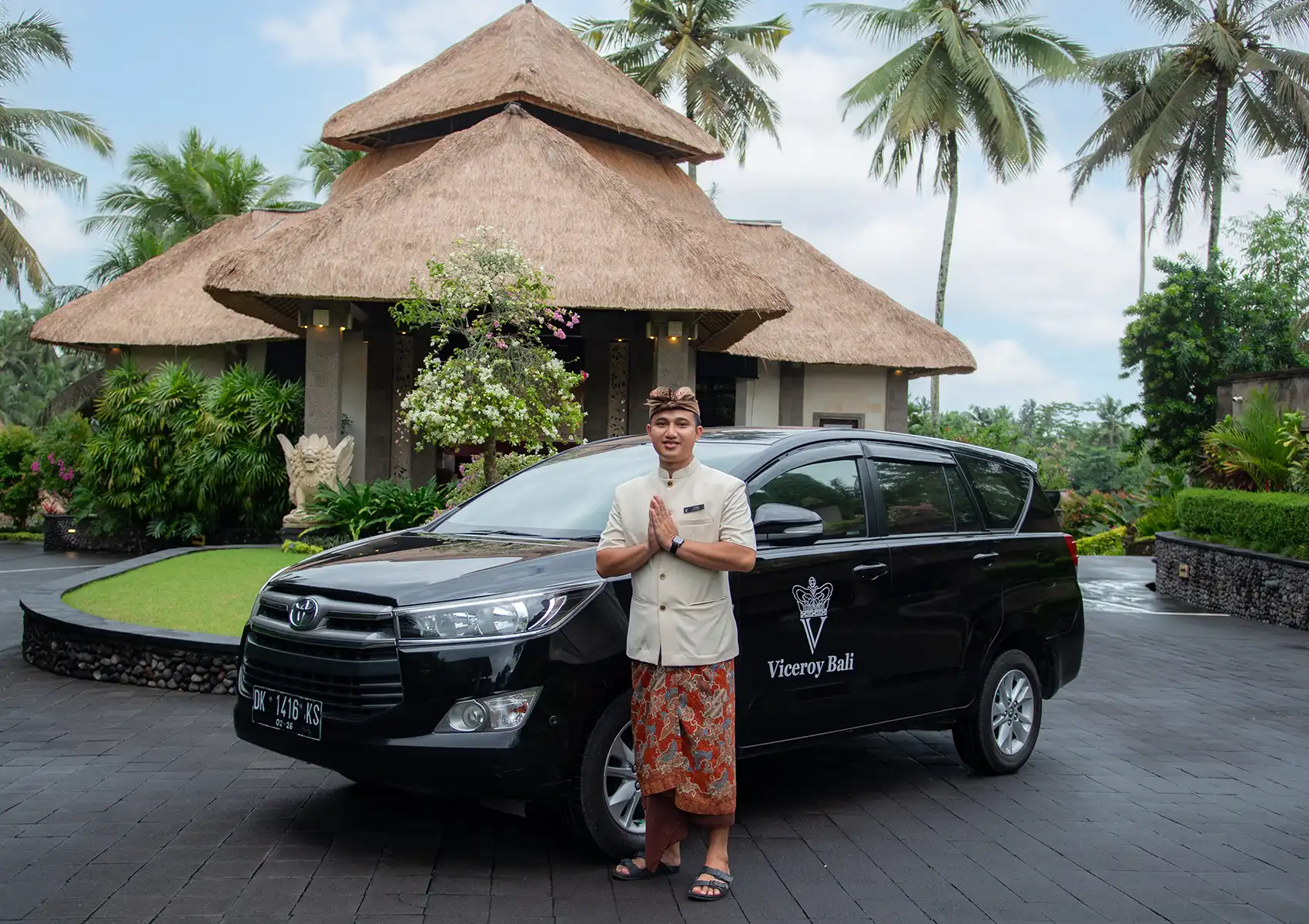
The journey can also be part of a more conscious stay. Airport transfers are available in Viceroy Bali’s electric Denza D9, providing an alternative to a conventional petrol-powered hotel transfer.
When choosing a sustainable luxury hotel, look beyond promotional claims and consider the evidence behind them. Start by looking for independent certification, then consider how the property manages water, energy, waste, food, and its relationship with the local community.
At Viceroy Bali, those commitments are supported by GSTC Certification and a range of documented practices that guests can experience during their stay.
Choose a Stay Above the Valley
Frequently Asked Questions
How can I tell if a hotel in Bali is genuinely sustainable?
Independent certification can be a useful starting point when assessing a hotel’s sustainability practices. GSTC Certification provides a globally recognised framework covering sustainable management, socioeconomic benefits, cultural heritage and environmental responsibility. Viceroy Bali achieved GSTC Certification in June 2026 following an assessment by Control Union that included documentation reviews, staff interviews, supplier assessments and on-site audits.
It is also useful to look for specific information about water management, energy use, waste reduction, local employment and community initiatives.
Is Viceroy Bali an eco-friendly luxury hotel?
Viceroy Bali holds GSTC Certification and has a range of documented sustainability initiatives. These include drinkable filtered tap water, the elimination of single-use plastic bottles, an 18-step organic wastewater treatment system, solar panels, local employment and an organic kitchen garden.
Does a sustainable hotel mean a less luxurious stay?
Not necessarily. At Viceroy Bali, many sustainability measures are integrated into the guest experience rather than presented as compromises. Guests have access to filtered drinking water, reusable bottles and tumblers, private heated pools, hand-blown recycled glassware and produce from the property’s organic kitchen garden.
Does Viceroy Bali offer an electric airport transfer?
Yes. Viceroy Bali offers airport transfers in the property’s electric Denza D9. The journey from Ngurah Rai International Airport to the resort generally takes around one and a half to two hours, depending on traffic.